
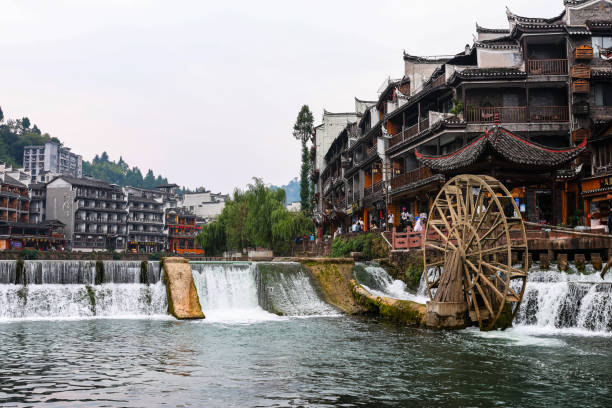
There is a place in Yunnan where 800 years of history flow through cobblestone streets as naturally as the water that runs beneath them. Where Naxi grandmothers in traditional dress sell handmade flatbread beside centuries-old canals, where ancient wooden buildings lean together like old friends, and where the distant silhouette of snow-capped mountains frames every rooftop. This is Lijiang Old Town — one of the most atmospheric, beautifully preserved ancient cities in all of China.
Known in Chinese as Lijiang Gucheng (丽江古城) and sometimes called Dayan Old Town (大研古镇), this remarkable place has been a UNESCO World Heritage Site since 1997 and holds the highest tourism designation in China as a National 5A Scenic Area. Sitting at 2,400 meters elevation in northwest Yunnan, Lijiang Old Town is not a museum — it is a living, breathing town where centuries-old Naxi culture coexists with modern travelers from around the world.

A Brief History — 800 Years of Naxi Heritage
Lijiang Old Town was founded during the late Song Dynasty and early Yuan Dynasty, around the 13th century. The town was established as the heartland of the Naxi people, an ethnic minority with their own language, religion, music, and one of the most remarkable writing systems on earth. For 470 years, from 1253 to 1723, Lijiang was ruled by the powerful Mu family — Naxi chieftains who governed the region with extraordinary skill and cultural ambition.
One of the most famous legends about Lijiang Old Town explains why it has no city walls. Unlike nearly every other ancient Chinese city, Dayan was built without defensive walls. The story goes that the ruling Mu family’s surname (木, meaning “wood”) would become the character 困 (meaning “trapped”) if surrounded by the character 口 (meaning “wall”). Rather than trap their own name, the Mu chieftains simply left the town open.
Lijiang also played a critical role as a major hub on the ancient Tea-Horse Road (茶马古道), connecting Yunnan’s tea-producing regions with Tibet and beyond.
Sifang Street — The Heart of Lijiang Old Town
Every ancient town has a center, and in Lijiang Old Town that center is Sifang Street (四方街). This roughly 500-square-meter open square has been the social and commercial heart of the town for centuries. In the old days, Sifang Street was the main trading plaza of the Tea-Horse Road.
Today, Sifang Street is surrounded by restaurants, shops, and cafes housed in traditional Naxi wooden buildings. The real magic happens in the evening, when local Naxi residents gather in the square for traditional dancing. The music starts, the circle forms, and before you know it, travelers are pulled in to join the dance alongside grandmothers in traditional dress.

Mu Palace — The Mini Forbidden City of Lijiang
If Sifang Street is the heart of Lijiang Old Town, then Mu Palace (木府) is its soul. This magnificent compound was the official residence of the Mu family chieftains who ruled the Naxi people for nearly five centuries. Often called the “mini Forbidden City,” Mu Palace is a sprawling complex of halls, courtyards, gardens, and towers that blends Naxi architectural traditions with Han Chinese palace design.
- Ticket price: ¥40 per person
- Time needed: 1.5 to 2 hours
- Highlights: The main hall (议事厅), the Wanjuan Tower library, and the rear garden
- Tip: Visit in the morning when light is best and crowds are thinner
Wangu Tower and Lion Hill — The Best View in Lijiang
For the single best panoramic view of Lijiang Old Town, climb Lion Hill (狮子山) to Wangu Tower (万古楼). From the top, the entire old town spreads out below you — a sea of grey tile rooftops, punctuated by green courtyard trees and silver water channels. On a clear day, Jade Dragon Snow Mountain rises in the distance. Ticket: ¥35. The best time is late afternoon for golden light and sunset.

The Water Wheels and Walking the Waterways
The famous Water Wheels (大水车) stand at the northern entrance to Lijiang Old Town — THE classic photo spot. Three streams flow through the ancient town from north to south, branching into hundreds of smaller channels that run alongside streets, under bridges, and through courtyards. This intricate water system earned Lijiang the nickname “Venice of the East.”
Black Dragon Pool — The Classic Reflection
Just north of the old town, Black Dragon Pool Park (黑龙潭公园) offers the famous reflection of Jade Dragon Snow Mountain in still water, framed by a traditional moon bridge. Free entry. Best at 7-8 AM for the clearest reflection.
Planning a Trip to Lijiang? Let Us Help
Whether you want a dedicated Lijiang walking tour with a Naxi-speaking guide, or a broader Yunnan itinerary that includes Lijiang as a highlight, we can put together a trip that fits your schedule, budget, and interests.
Naxi Culture — The Living Heritage of Lijiang
Dongba Script — The World’s Only Living Hieroglyphic Writing
The Naxi people developed Dongba script (东巴文) — the world’s only hieroglyphic writing system still in active use. Each character is a small picture. Dongba priests still use this script today in religious ceremonies. Visit the Naxi Dongba Culture Museum to learn more.
Naxi Ancient Music
Centuries-old orchestral compositions, some dating back to the Tang and Song Dynasties, preserved by Naxi musicians. Evening concerts in the old town are hauntingly beautiful.
Traditional Naxi Dress
Look for the iconic “Seven Stars and Moon” back cape (七星披肩) — seven circular embroidered discs representing stars and a crescent for the moon, symbolizing the Naxi ideal of working from dawn to dusk.

Food in Lijiang Old Town
Chickpea Jelly (鸡豆凉粉)
The quintessential Lijiang street food. Soft jelly made from local chickpeas, served cold with chili oil or fried crispy. A few yuan at street stalls everywhere.
Naxi Flatbread (丽江粑粑)
Layered flatbread, pan-fried until crispy. Sweet version with brown sugar and rose petals, savory with scallions and ham. Originally a Tea-Horse Road travel food.
Cured Rib Hotpot (腊排骨火锅)
Lijiang’s signature dish — salt-cured pork ribs simmered in clay pot with potatoes, tofu, and vegetables. Perfect for cool evenings.
Wild Mushroom Hotpot (野生菌火锅)
June through October, restaurants serve wild mushroom hotpot with matsutake, porcini, chanterelles, and dozens of unique local species.
For payment tips, see our guide to paying in China.

Nightlife — Bar Street and Beyond
Lijiang Old Town comes alive after dark. Bar Street (酒吧一条街) runs along a canal with live bands, folk singing, colored lanterns reflecting in water. Some bars are loud and lively, others quieter with acoustic performances. For a more cultural evening, catch a performance of Naxi Ancient Music.
Shuhe and Baisha — The Quieter Side
Shuhe Ancient Town (束河古镇) — 4km north, smaller, slower, less commercialized. Historically the leather-working center of the Tea-Horse Road. A perfect half-day complement.
Baisha Old Town (白沙古镇) — 8km north, the most traditional. Home to the Baisha Murals (白沙壁画), Ming Dynasty religious paintings blending Buddhist, Daoist, and Naxi Dongba imagery.
How to Get to Lijiang
By Air: Lijiang Sanyi Airport has direct flights from Kunming (~1hr), Chengdu, Shanghai, Beijing. 30min drive to old town.
By Train: High-speed rail from Kunming ~3 hours, from Dali ~2 hours. One of the most scenic train rides in China.
For language and safety tips, see our guides on the language barrier and safety in Yunnan.
Best Time to Visit Lijiang Old Town
March to May and September to November — dry, comfortable, clear skies, manageable crowds. Best months overall.
July-August — rainy season + Chinese summer holidays = crowded and wet. Avoid if possible.
For detailed seasonal breakdown, see our best time to visit Yunnan guide.
Practical Tips
Free entry to the old town itself. Mu Palace ¥40, Wangu Tower ¥35 separate.
Wear comfortable flat shoes — cobblestone streets everywhere, slippery when wet.
Altitude: 2,400m — manageable for most, drink water, go easy on day one.
Bring a jacket — nights are cool year-round, even in summer (15°C evenings).
Stay inside the old town — hundreds of guesthouses from ¥100 budget to ¥1,000+ boutique. Staying inside means quiet mornings and evening atmosphere.
Minimum 2 nights — one day for old town, one for Shuhe/Baisha/surroundings.

Ready to Visit Lijiang Old Town?
As a local Yunnan travel agency, we know these streets, restaurants, and hidden corners personally. Tell us what you are interested in, and we will design a trip around you.
Frequently Asked Questions
Is there an entrance fee for Lijiang Old Town?
No. Walking around Lijiang Old Town is completely free. Mu Palace costs ¥40 and Wangu Tower ¥35 separately. Black Dragon Pool is free.
How many days do you need in Lijiang?
Minimum two nights. One full day for Lijiang Old Town — Sifang Street, Mu Palace, Wangu Tower, waterways. Second day for Shuhe, Baisha, or nearby attractions.
What is the best time of year to visit?
March through May and September through November. Dry weather, clear skies, comfortable temperatures, fewer crowds.
Is altitude sickness a problem in Lijiang?
Lijiang sits at 2,400m. Most visitors have no significant problems. Stay hydrated, avoid heavy alcohol on arrival, take it easy the first day.
What is the difference between Lijiang Old Town, Shuhe, and Baisha?
All three are UNESCO-listed. Lijiang Old Town (Dayan) is the largest with the most restaurants, bars, and attractions. Shuhe (4km north) is smaller and quieter. Baisha (8km north) is the most traditional, known for Ming Dynasty murals. Most visitors base in Lijiang Old Town and day-trip to the others.
Related Guides
- Best Time to Visit Yunnan
- Is Yunnan Safe for Foreigners?
- Language Barrier in Yunnan
- How to Pay in China as a Foreign Tourist
