Pudacuo National Park: Shangri-La's Alpine Paradise
April 24, 2026
Just 22 kilometers from Shangri-La town lies one of China's first official national parks, completely overturning most people's expectations of Yunnan. Potatso National Park is a world of alpine meadows, crystal-clear lakes, and primeval forests draped with hanging moss, at an average altitude of about 3,500 meters. It feels less like subtropical China and more like a magical blend of the Swiss Alps and ancient woodlands. If you're visiting Shangri-La, this park is an absolute must-see.

Why Visit Potatso National Park in Shangri-La
Established in 2007, Potatso National Park was one of China's first national parks built to international standards. Covering 1,313 square kilometers, it protects a remarkable section of the eastern Himalayan ecosystem, recognized as one of the world's biodiversity hotspots. The park is home to rare species such as the black-necked crane and clouded leopard, along with several endemic fish found nowhere else on Earth.
But even if you're not a wildlife enthusiast, Potatso's beauty is reason enough to visit. The scenery alone is a compelling draw. Two main lakes—Shudu Lake and Bita Sea—are surrounded by spruce and oak forests that blaze with gold in autumn and burst with wildflowers in summer. The air is crisp and clean, the trails are well-maintained, and the pace of exploration is refreshingly relaxed.
For travelers coming from bustling cities like Kunming or even Lijiang, Potatso feels like stepping into an entirely different world. It's a reminder that Yunnan's diversity extends far beyond its famous ancient towns and rice terraces, reaching into true wilderness.
How to Get to Potatso National Park
Potatso is located 22 kilometers east of Shangri-La town, making it one of the most accessible attractions in the area.
From Shangri-La
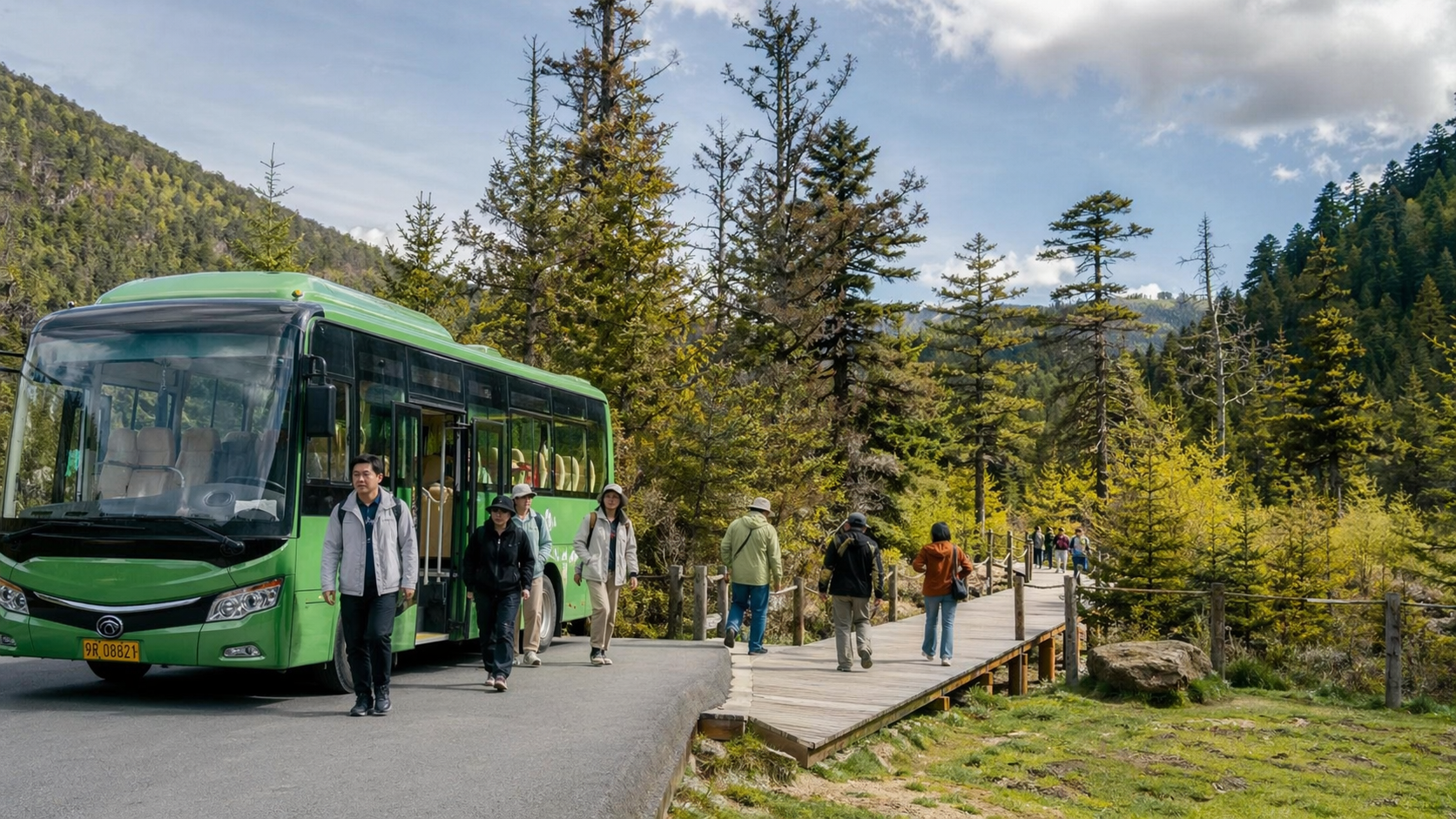
During peak season, dedicated tourist shuttle buses run from Shangri-La to the park entrance, taking about 30-40 minutes. A taxi costs around 80-100 RMB one way. If you're on a guided tour, transportation is usually included, which is the most convenient option as you won't need to worry about return timing.
How to Reach Shangri-La
Shangri-La is accessible by flight from Kunming (1 hour) or by road from Lijiang (4 hours). The scenic drive from Lijiang passes near Tiger Leaping Gorge, so many travelers incorporate this into their itinerary. For a broader Yunnan trip, visitors often combine Shangri-La with Dali and Lijiang in a loop itinerary.
Best Time to Visit Potatso National Park
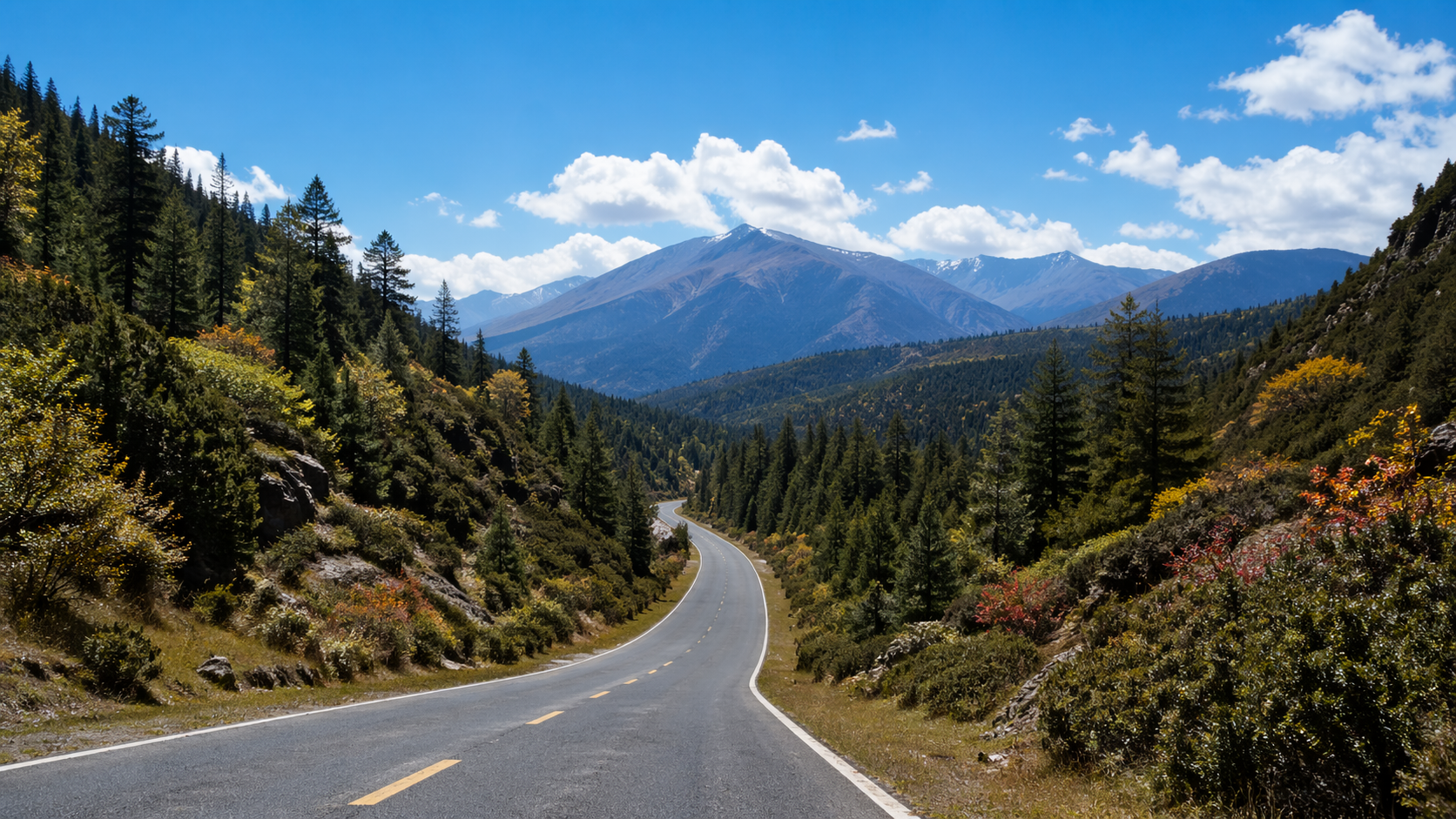
Potatso is beautiful year-round, but each season offers a different experience.
Spring (April to May) – Rhododendrons and wildflowers bloom across the meadows, and migratory birds return to the lakes
Summer (June to August) – The grasslands are at their greenest, perfect for hiking, though afternoon showers are common
Autumn (September to November) – Undoubtedly the best season. The forests turn gold, orange, and deep red, with clear air ideal for photography
Winter (December to March) – Cold and serene, with snow blanketing the forests. Fewer visitors and a peaceful atmosphere, but some trails may be closed
For most visitors, late September to mid-October offers the best combination of weather and autumn colors. Our guide to the best time to visit Yunnan provides more seasonal details for planning your trip.
Must-See Attractions in Potatso: Shudu Lake, Bitahai, and Other Highlights
Shudu Lake
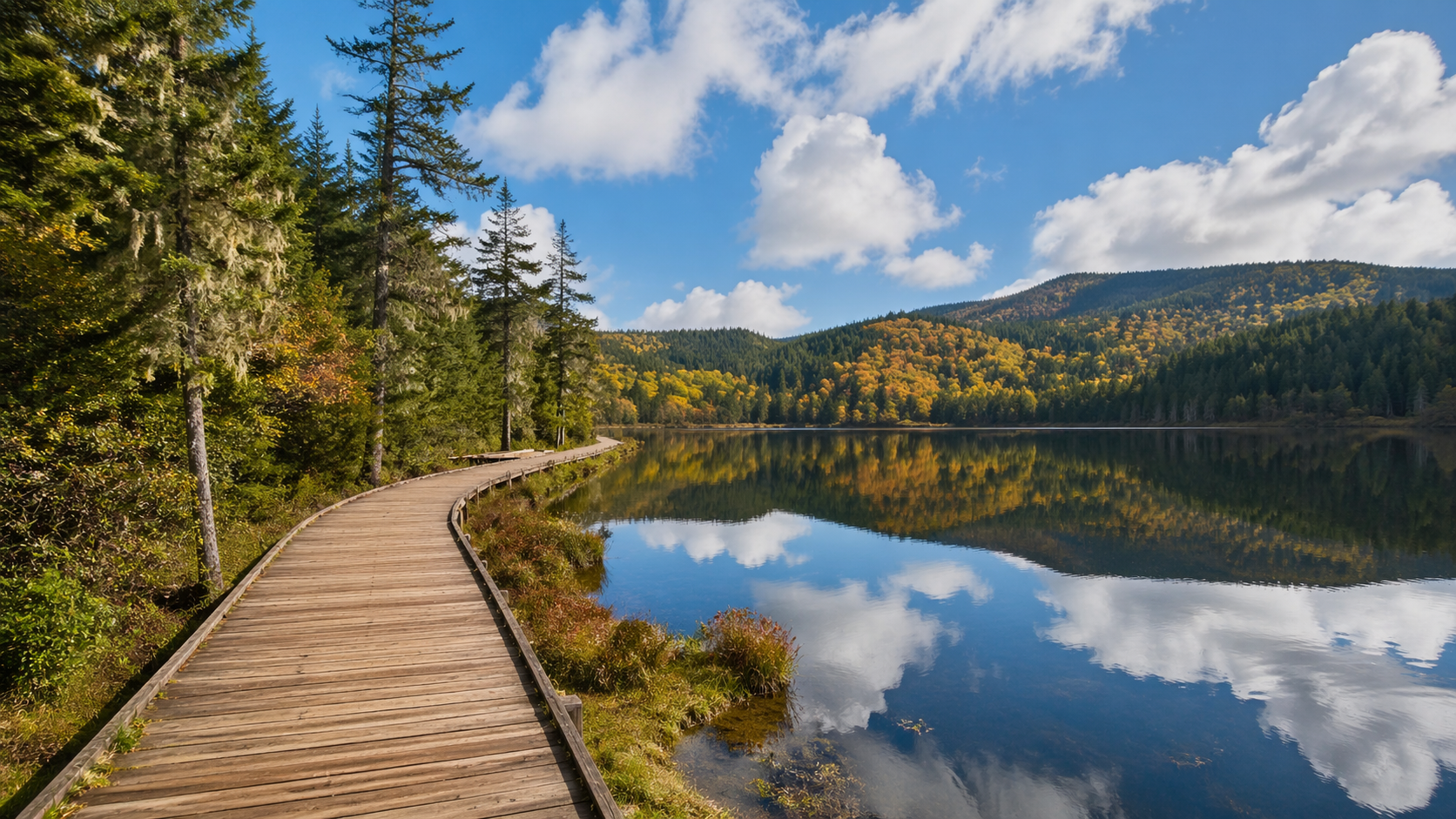
Shudu Lake is the first stop on the park loop and one of the most photogenic spots in all of Shangri-La. This alpine lake sits at an altitude of 3,705 meters, surrounded by dense spruce forests. A 3.3-kilometer wooden boardwalk winds along the lake's edge, passing through meadows and wetlands. In summer, wildflowers bloom across the grasslands while yaks graze leisurely; in autumn, the surrounding forests burst into vibrant colors, reflected in the tranquil waters.
A leisurely stroll along the entire boardwalk takes about 1-1.5 hours. If you're concerned about altitude sickness or physical stamina, you can also take the park's sightseeing bus between viewpoints and only walk the sections that interest you most.
Bitahai Lake
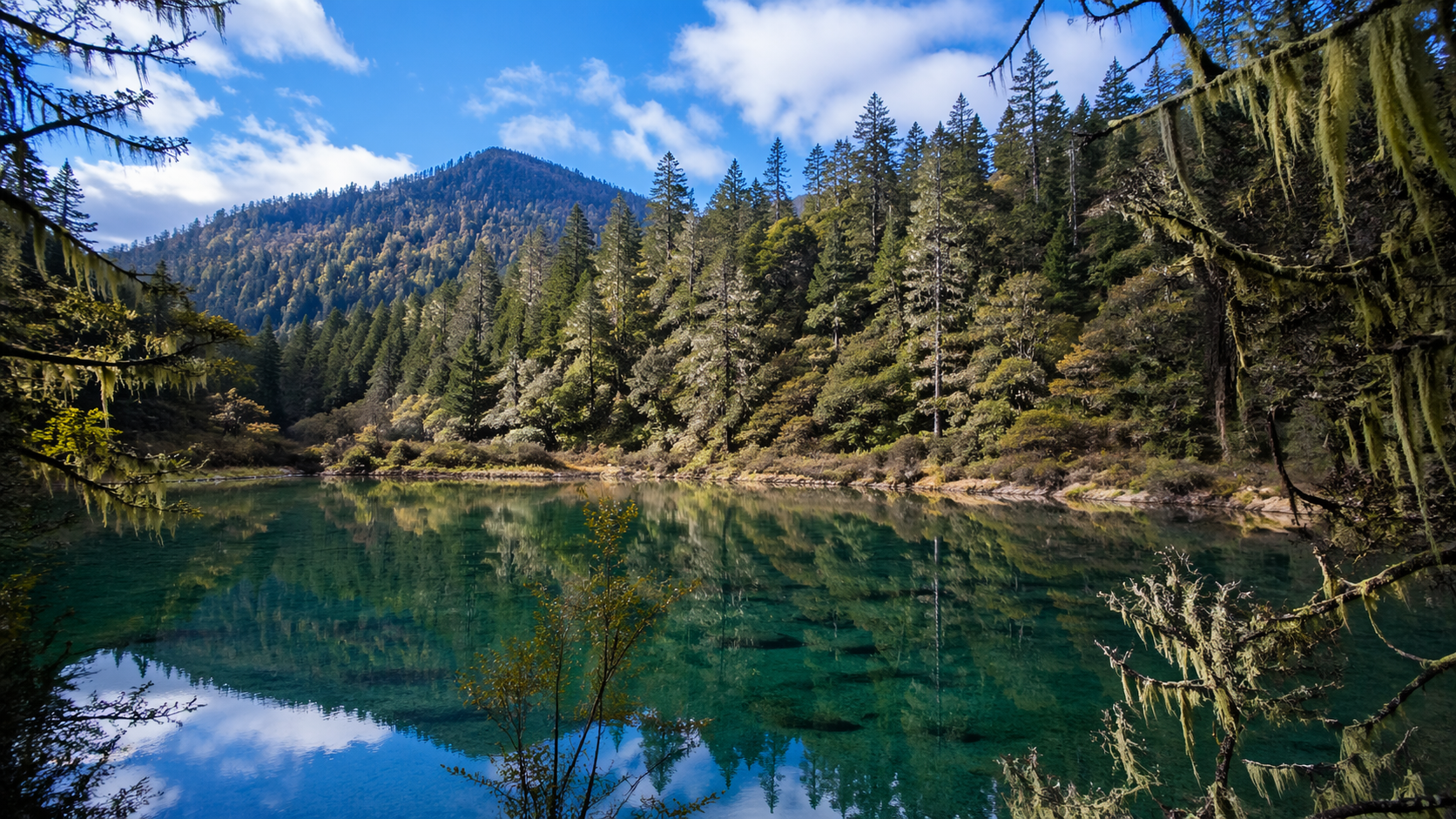
Bitahai Lake is the park's other major lake, with a more mysterious atmosphere. At an altitude of 3,539 meters, it is slightly smaller than Shudu Lake but surrounded by denser, older forests. The lake is famous for a peculiar natural phenomenon: in late spring, rhododendron petals fall into the water, and certain fish that eat them become "drunk" and float to the surface, attracting flocks of birds. Locals have poetically named it the "Drunken Fish Lake."
Currently, to protect the ecosystem, visitor access to Bitahai is carefully managed. Observation platforms offer panoramic views of the lake, and the surrounding forest trails are among the quietest areas in the park. The 4.2-kilometer trail winds through primeval forests, with trees draped in lichen and moss.
Militang Alpine Pasture
Between the two lakes, the park's sightseeing bus passes through Militang—a vast alpine pasture where Tibetan herders graze yaks and horses. In summer, it's a sea of wildflowers; in autumn, golden meadows stretch to the horizon under a deep blue sky. The bus makes a brief stop here for photos, and it's worth getting off to soak in the magnificent scenery.
Birdwatching and Wildlife
Potatso is a paradise for birdwatchers. The park is home to over 200 species of birds, including the elegant and rare black-necked crane, which winters in the wetlands. You may also spot Himalayan monals, blood pheasants, and various laughingthrushes. The park is also home to red pandas and musk deer, though they are shy and rarely seen.
Want to explore Shangri-La worry-free? Let our local travel experts tailor a custom itinerary for you.
Practical Tips for Visiting Potatso National Park in Shangri-La
Tickets and Park Layout
Ticket prices are 100 RMB (about $14 USD), which includes the park's sightseeing bus connecting all major areas. The standard route is a loop: take the bus to Shudu Lake, walk the boardwalk, then bus to Militang Pasture, then bus to Bitahai Lake, walk the trail, and finally bus back to the entrance. A full loop takes about 3-4 hours.
Altitude Considerations
The park's trails are at altitudes between 3,500-3,700 meters. The boardwalks are flat and easy to walk, but the high-altitude environment can make even light hiking more tiring than expected. Take it slow, rest as needed, and bring drinking water. Small oxygen canisters are available at the entrance, but most healthy visitors don't need them if they maintain a relaxed pace.
Essential Items
Warm jacket—temperatures are 10-15°C lower than in Shangri-La town, and weather changes quickly
Rain gear—afternoon showers are common in summer
Comfortable hiking shoes—boardwalks are flat but can be slippery when wet in some sections
Snacks and water—food options inside the park are limited
Fully charged camera—cold weather drains batteries faster
Payment and Practical Details
The ticket office accepts mobile payments and cash. Inside the park, there is a small shop near the bus transfer point. For a complete guide on payments in China for foreign tourists, check out our payment guide.
📷 Please insert image:
Accommodation Recommendations for Visiting Potatso
There is no lodging inside the park. Most visitors stay in Shangri-La town, choosing between Dukezong Ancient Town or the new city area. Dukezong Ancient Town offers a better atmosphere, with dozens of Tibetan-style inns and boutique hotels lining its ancient streets.
A typical Shangri-La itinerary usually allocates one full day for Potatso and another day for Songzanlin Monastery and the old town, so staying 2-3 nights in Shangri-La allows for a comfortable visit. Budget inns start at around 100-150 RMB per night, while mid-range boutique hotels range from 300-600 RMB.
Frequently Asked Questions
How long does it take to visit Pudacuo National Park?
Most visitors spend 3-4 hours on the standard loop, which includes two lakes and a meadow. If you prefer to leisurely walk all the boardwalk sections and stop at every viewpoint, plan for half a day. The park is open from 8:00 AM to 5:00 PM, and we recommend arriving early to avoid the crowds.
Is Pudacuo National Park suitable for children and elderly visitors?
Yes. The boardwalks in the park are flat and well-maintained, with no steep climbs. Shuttle buses connect all major areas, so you can choose how far to walk based on your preference. The only thing to keep in mind is the altitude. Please take it slow and monitor the condition of your companions. Typically, children under 6 years old can enter for free.
Can I combine Pudacuo with other attractions in Shangri-La?
Absolutely. A well-planned 3-4 day itinerary for Shangri-La usually includes Pudacuo National Park, Songzanlin Monastery, Dukezong Ancient Town, and Napahai Lake. Travelers with more time often add a short trip to Meili Snow Mountain. A local guide can help you efficiently arrange the order of these attractions based on the weather and your energy levels.
Is Pudacuo National Park crowded?
During Chinese public holidays (such as the Golden Week in early October and the Spring Festival), the park can be quite busy. On regular weekdays, however, the crowds are very manageable. The shuttle bus system helps distribute visitors across the park, so even during moderate traffic, it rarely feels overcrowded. Early morning visits are always the quietest.
Is Yunnan safe for foreign tourists?
Very safe. Yunnan is one of the most foreigner-friendly provinces in China. The crime rate is low, local residents are welcoming, and the tourism infrastructure is well-developed. For more details, please read our complete Yunnan safety guide.
Want to explore Shangri-La worry-free? Let our local travel experts tailor a custom itinerary for you.
Related Articles
Plan it for real
Turn this destinations guide into your actual trip
Tell us your dates and interests — we'll send a free, no-pressure route within 24 hours. We've helped hundreds of readers do exactly this.
Free · No spam · Reply within 24h · Local Yunnan team since 2016
Free download
Get the 12-page Yunnan route planner
Best months, sample routes, realistic costs, altitude tips, and common mistakes — built by a local Kunming team. Free instant download.
Share this page