
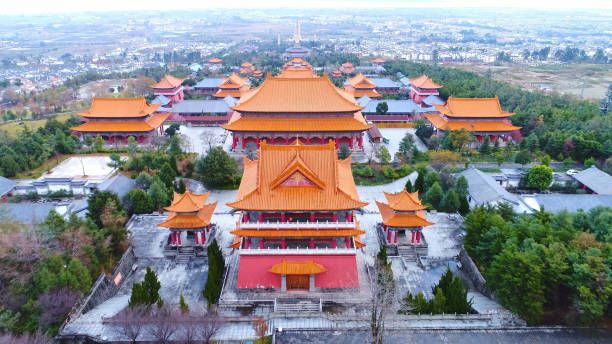
Rising like a massive wall behind the ancient rooftops of Dali, Cangshan Mountain is one of Yunnan’s most spectacular natural landmarks. With nineteen peaks stretching over 50 kilometers and reaching heights above 4,000 meters, this mountain range dominates the western shore of Erhai Lake and provides a jaw-dropping backdrop to everything you do in the Dali region. Whether you come for a serious alpine hike, a scenic cable car ride, or simply to escape into cool mountain air, Cangshan delivers an experience that stays with you.

Why Visit Dali Mountain: Cangshan’s Appeal
Cangshan isn’t just a pretty mountain to look at from your guesthouse window. It’s a fully accessible wilderness area right on the doorstep of one of Yunnan’s most popular towns. The range is home to alpine meadows blanketed in wildflowers, ancient temples tucked into forested valleys, crystal-clear glacial lakes, and some of the richest biodiversity in all of China. Over 3,000 plant species grow on these slopes, including dozens of varieties of camellia and rhododendron that explode into color each spring.
What makes Cangshan especially appealing for visitors is the variety of ways to experience it. You don’t need to be a hardcore mountaineer. Families, casual walkers, and adventure seekers all find something here, from gentle walks along the Cloud Wandering Trail to full-day hikes between peaks.
How to Get to Cangshan Mountain
Cangshan rises directly west of Dali Old Town, so reaching the mountain’s base is straightforward. From the West Gate of the old town, it’s about a 10-minute drive or a 30-minute walk uphill to the lower cable car stations.
If you’re coming from further away, first get yourself to Dali. High-speed trains from Kunming take about 2 hours, and from Lijiang about 1.5 hours. Dali also has an airport with domestic connections. Once you’re in the Dali area, local taxis or ride-hailing apps can get you to any of the three cable car base stations within minutes.
Best Time to Visit Cangshan
The mountain is accessible year-round, but the experience changes dramatically with the seasons. March to May is prime time. The rhododendrons and azaleas bloom across the upper slopes, the weather is warm but not hot, and visibility is at its best. This is also the best time to visit Yunnan in general.
October and November offer clear autumn skies and crisp mountain air, with the added bonus of golden foliage at mid-elevations. Summer hiking is possible but you’ll encounter rain and cloud cover that can obscure the views. Winter brings snow to the upper peaks, creating a beautiful scene, though some trails and the higher cable car may close temporarily.

Top Things to See and Do on Cangshan
Ride the Cangshan Cable Car
There are three Cangshan cable car systems, each offering a different experience. The Washburn Cable Car (also called the Grand Cangshan Cable Car) is the most popular, taking you up to 3,920 meters near the summit of Malong Peak. The ride itself is breathtaking, gliding over deep valleys and dense forest canopy for about 25 minutes. At the top, a boardwalk leads to a viewing platform where you can see Erhai Lake spread out below like a mirror.
The Zhonghe Cable Car is a shorter, cheaper option that takes you to the mid-level Cloud Wandering Trail at around 2,600 meters. The Gangtong Cable Car provides access to Gangtong Temple and the Qingbi Stream area. Ticket prices range from 80 to 300 RMB round-trip depending on the line.

Hike the Cloud Wandering Trail (Yundao)
The most popular Cangshan hiking route is the Cloud Wandering Trail, a well-maintained boardwalk path that runs along the mountainside at around 2,600 meters elevation. It connects the Zhonghe Cable Car station to the Gangtong Cable Car station, covering about 11 kilometers. The walk takes roughly 3-4 hours and offers continuous panoramic views of the old town, Erhai Lake, and the surrounding countryside.
This is an ideal trail for most visitors because it’s relatively flat, well-marked, and doesn’t require any special equipment. Along the way, you’ll pass through pine and oak forests, cross small streams, and encounter a couple of rest pavilions where you can sit and take in the views. Starting from the Zhonghe Cable Car end and walking south toward Gangtong is the standard direction.
Explore the Nineteen Peaks and Eighteen Streams
The nineteen peaks of Cangshan are arranged in a north-south line, with eighteen streams flowing down through the valleys between them. Each peak has its own character and name, with the highest being Malong Peak at 4,122 meters. The streams feed into Erhai Lake and have carved out deep, lush valleys over thousands of years.
For experienced hikers, the traverse across multiple peaks is a challenging but rewarding multi-day adventure. More accessible valleys include the Qingbi Stream near Gangtong Temple and the Phoenix Eye Cave area, both reachable by shorter hikes from the cable car stations. These spots are especially beautiful after rain, when waterfalls cascade down the rock faces.
Visit Ancient Temples Along the Slopes
Several centuries-old temples are scattered across Cangshan’s slopes. Zhonghe Temple, located near the Zhonghe Cable Car upper station, is a serene spot with incense drifting through old pine trees. Gangtong Temple sits in a forested valley and is one of the oldest Buddhist sites in the Dali region, dating back to the Nanzhao Kingdom. These temples add a cultural and spiritual dimension to what might otherwise be a purely nature-focused visit.
Chase the Snow and Clouds
One of Dali’s famous “Four Scenes” is Cangshan Snow (Cang Shan Xue). In winter and early spring, the upper peaks are dusted with snow that contrasts beautifully with the green valleys below. On many days, clouds settle into the valleys between peaks, creating a sea of white that you can look down upon from the higher trails. These cloud formations are actually one of Cangshan’s signature sights and a major reason photographers flock here.

Want to explore Cangshan Mountain without the hassle of planning? Let our local travel experts design a personalized itinerary just for you.
Travel Tips for Cangshan Mountain
The temperature drops significantly as you gain elevation. Even on a warm day in Dali Old Town (around 20-25 degrees Celsius), it can be 5-10 degrees at the upper cable car stations. Bring a warm layer and a rain jacket regardless of the season. The weather on the mountain changes fast, and getting caught in a sudden shower without protection is no fun.
Altitude can affect you at the higher elevations, especially if you take the Grand Cable Car straight up to nearly 4,000 meters. Walk slowly, drink water, and don’t push yourself if you feel lightheaded. Most people adjust fine, but it’s worth knowing that you’re at serious altitude up there.
There are basic snack shops near the cable car stations but no proper restaurants on the mountain. Pack some food and plenty of water if you plan to hike the Cloud Wandering Trail. Wear proper hiking shoes with good grip, as some sections can be slippery, especially after rain.
Navigating the different cable car options and trailheads can be confusing, especially with limited English signage on the mountain. Having a local guide or a well-planned itinerary makes a real difference here. Our team knows these trails well and can match you with the right route for your fitness level and interests.
Where to Stay Near Cangshan
Most visitors stay in Dali Old Town and visit Cangshan as a day trip, which works perfectly given the mountain’s proximity. For those who want to wake up even closer to the mountain, there are guesthouses along the foothills between the old town and the cable car stations. Some offer stunning views of both Cangshan above and Erhai Lake below.
- Budget: Stay in Dali Old Town and take a taxi or walk to the cable car stations
- Mid-range: Foothill guesthouses with mountain views, typically 300-600 RMB per night
- Splurge: Boutique mountain retreats along the Cangshan foothills, from 800 RMB and up

Frequently Asked Questions
How high is Cangshan Mountain?
The highest peak, Malong Peak, reaches 4,122 meters above sea level. The cable cars take you up to around 3,900 meters at the highest station. The Cloud Wandering Trail sits at approximately 2,600 meters, which is comfortable for most visitors.
Which Cangshan cable car should I take?
It depends on what you want. The Grand Cable Car (Washburn) goes highest and offers the most dramatic views, best for those who want alpine scenery. The Zhonghe Cable Car is the best starting point for the Cloud Wandering Trail hike. The Gangtong Cable Car gives access to temples and the Qingbi Stream valley. If you only have time for one, the Grand Cable Car is the most impressive.
Do I need to be fit to visit Cangshan?
Not necessarily. The cable cars do the hard work of getting you up the mountain, and the Cloud Wandering Trail is a gentle, mostly flat walk. However, if you want to tackle the steeper trails between peaks or hike from the base, a reasonable level of fitness is helpful. The altitude can make even easy walks feel more tiring than expected.
Can I combine Cangshan with other Dali attractions?
Absolutely. Most travelers spend one day on Cangshan and another day exploring Erhai Lake or the old town. A well-planned Dali itinerary of 3-4 days can cover all the highlights without feeling rushed. You could even combine a morning cable car ride with an afternoon in the old town.
Is it safe to hike Cangshan alone?
The Cloud Wandering Trail is well-maintained and safe for solo hikers. For more remote trails or anything above the tree line, it’s strongly recommended to go with a guide or at least inform someone of your route. Weather can change quickly at altitude, and mobile phone signal is spotty on the upper slopes. For a worry-free experience, our local guides know the mountain inside and out.
Want to explore Cangshan Mountain without the hassle of planning? Let our local travel experts design a personalized itinerary just for you.