
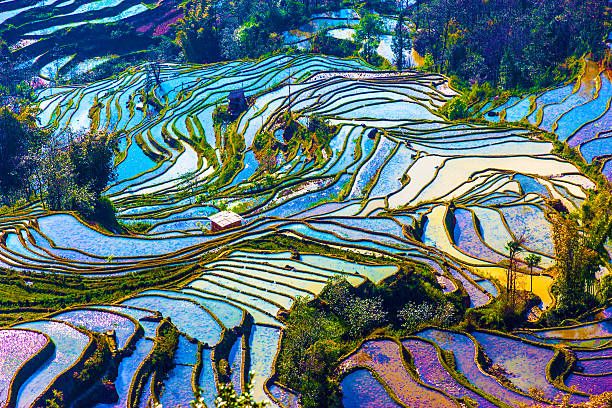
If you’ve ever scrolled through photos of Yunnan and stopped dead at a landscape that looked more like an oil painting than real life, chances are you were looking at the Yuanyang Rice Terraces. Carved into the mountainsides of southern Yunnan over the past 1,300 years by the Hani people, these terraces are one of China’s most breathtaking UNESCO World Heritage Sites — and one of Asia’s best-kept secrets for photography and cultural travel.

Why Visit the Hani Rice Terraces of Yuanyang
The Yuanyang terraces aren’t just pretty — they represent one of the most remarkable feats of agricultural engineering on the planet. The Hani people transformed steep, seemingly unusable mountain slopes into a vast network of irrigated paddies, fed by an ingenious water system that channels rainfall from the forested peaks above all the way down to the valley floor.
What makes Yuanyang truly special is how it changes with the seasons. In winter and early spring, the terraces are flooded with water, turning them into thousands of mirrors that reflect the sky. During summer, they glow with lush green rice shoots. And in autumn, golden rice stalks blanket the hillsides. Each visit gives you a completely different landscape.
Beyond the scenery, Yuanyang offers a rare window into living Hani culture. The villages here haven’t been turned into theme parks — people still farm the terraces the way their ancestors did, wear traditional clothing, and hold festivals tied to the agricultural calendar. It’s the kind of travel experience that feels genuinely authentic.

How to Get to Yuanyang Rice Terraces
Yuanyang sits in the Honghe Hani and Yi Autonomous Prefecture, about 320 kilometers south of Kunming. There’s no airport or high-speed rail station in Yuanyang itself, so getting there requires a bit of planning.
From Kunming by Bus
The most common route is a direct bus from Kunming South Bus Station to Yuanyang Xinjie (the main town near the terraces). The ride takes about 5-6 hours and passes through some stunning mountain scenery. Buses depart several times daily, with morning departures being the most popular.
By Private Car or Organized Tour
Hiring a private car or joining an organized tour from Kunming is the most comfortable option and gives you flexibility to stop along the way. Many travelers combine Yuanyang with a visit to the Stone Forest near Kunming or the Dongchuan Red Land on a multi-day Yunnan photography circuit. If you’d rather not deal with local transportation logistics, a guided tour with a driver makes the whole trip much smoother.
Getting Around Yuanyang
Once in Yuanyang, the main viewing areas are spread across a wide area. The key terraces — Duoyishu, Bada, Laohuzui, and Longshuba — are 15 to 30 minutes apart by car. Local minibuses connect some points, but schedules can be unreliable. Having your own driver or renting a car is highly recommended, especially if you want to catch sunrise and sunset at the best viewpoints.
Best Time to Visit Yuanyang for Sunrise Photography
Timing is everything in Yuanyang, and this is especially true if you’re coming for Yuanyang sunrise photography. The terraces look dramatically different depending on the season, and the lighting conditions can make or break your shots.
- November to March (peak season): The terraces are flooded with water, creating mirror-like reflections. This is the absolute best time for photography. Sunrise at Duoyishu during this period is legendary.
- April to May: Rice planting season. The terraces shift from silvery mirrors to vivid green patches as new rice is planted.
- June to September: Lush green rice paddies cover the hillsides. Beautiful but the rainy season means more cloud cover.
- October: Golden harvest season. The terraces turn amber and gold before the fields are drained again.
For the classic Yuanyang experience, aim for December through February. The flooded terraces, combined with sea-of-clouds conditions that frequently roll through the valleys, create those otherworldly images that have made this place famous. Check our Yunnan seasonal guide for more details on planning around weather.

Top Things to See and Do at Yuanyang
Duoyishu Sunrise Viewpoint
This is the crown jewel of Yuanyang and one of the most famous sunrise spots in all of China. The viewpoint overlooks a sweeping amphitheater of terraces that cascade down the mountain, and when the first light hits the flooded paddies, the effect is absolutely magical. Get there at least 30 minutes before dawn to claim a good spot — serious photographers arrive even earlier.
Bada Terraces at Sunset
While Duoyishu is the sunrise champion, Bada (also called Bada Jingzhai) wins for sunsets. The terraces here face west, and on a clear evening, the setting sun paints the water surfaces in shades of orange, pink, and purple. The terraces at Bada stretch over 14,000 mu (roughly 930 hectares), giving you a massive canvas to work with.

Laohuzui (Tiger Mouth) Terraces
Named because the terraces supposedly resemble a tiger’s mouth from above, Laohuzui offers the most dramatic topography in the area. The terraces plunge steeply into a deep valley, and the sheer scale of the landscape is jaw-dropping. This is a great spot for midday photography when the light is too harsh for Duoyishu or Bada.
Hani Village Visits
Don’t spend all your time at viewpoints — some of the best experiences in Yuanyang come from exploring the Hani villages themselves. Qingkou village is one of the most accessible and features traditional mushroom-shaped houses built with thatched roofs. Locals are generally friendly and welcoming, though having a guide who speaks the local language opens up much richer interactions.
Yunnan Photography Tour: Combining Yuanyang with Other Destinations
Many photographers visit Yuanyang as part of a broader Yunnan photography tour. A popular circuit includes Kunming, the Dongchuan Red Land, Yuanyang, and sometimes Jianshui or Pu’er. This itinerary covers dramatically different landscapes within a relatively compact area and can be done comfortably in 5-7 days.
Want to explore Yuanyang Rice Terraces without the hassle of planning? Let our local travel experts design a personalized itinerary just for you.
Practical Travel Tips for Yuanyang
Entrance ticket: A combined ticket for the main scenic areas costs around 100 RMB and is valid for multiple days. Keep your ticket — you’ll need to show it at each viewpoint.
Altitude and weather: Yuanyang sits at elevations between 1,400 and 2,000 meters. Mornings can be surprisingly cold, even in subtropical Yunnan. Bring layers, especially if you’re heading out for sunrise photography. Fog and mist are common — which is actually a good thing for photography, as the rolling clouds add incredible atmosphere to your shots.
Payment: Yuanyang is a rural area, and while mobile payment (WeChat Pay and Alipay) is widely used by locals, international visitors may find it tricky. Check our guide to paying in China before your trip to avoid any surprises. Carrying some cash is always a good backup plan in smaller villages.
Language: English is rarely spoken in Yuanyang. Hotel staff in Xinjie may know some basic English, but beyond that, communication can be challenging. A local guide who speaks both English and the Hani language will transform your experience.

Where to Stay in Yuanyang
Most visitors base themselves in Xinjie (also known as Yuanyang New Town), which has the widest selection of hotels and guesthouses. For a more atmospheric stay, consider guesthouses near the terraces themselves — several family-run places near Duoyishu and Shengcun put you within walking distance of sunrise viewpoints.
Accommodation here is basic but comfortable. Don’t expect five-star luxury — think clean rooms, hot water, and warm blankets. Some guesthouses near the terraces have rooftop terraces with stunning views, making them perfect for photographers who want to shoot without a commute.
If you want help finding the right accommodation and putting together a seamless Yuanyang itinerary, working with a local travel agency saves you hours of research and guesswork.

Frequently Asked Questions
How many days do I need in Yuanyang?
Most visitors spend 2-3 days in Yuanyang. This gives you enough time to catch sunrise at Duoyishu, sunset at Bada, explore Laohuzui, and visit a Hani village. Photographers who want to wait for perfect conditions often stay longer.
Is Yuanyang worth the long trip from Kunming?
Absolutely. The 5-6 hour drive is part of the adventure, passing through beautiful mountain terrain. And the terraces themselves are unlike anything else in Yunnan — or China, for that matter. Combine it with other southern Yunnan destinations like Jianshui to make the journey even more worthwhile.
Do I need a professional camera to enjoy Yuanyang?
Not at all. While professional photographers flock here with full gear, the terraces are breathtaking to the naked eye and photograph beautifully even on a smartphone. That said, a telephoto lens helps capture the intricate patterns of individual terraces, and a tripod is useful for low-light sunrise shots.
Can I visit Yuanyang independently without a tour?
It’s possible but challenging. Public transport within the scenic area is limited, signage is mostly in Chinese, and the best viewpoints require knowing exactly where to go and when. Independent travelers who speak some Chinese can manage, but most international visitors find that having a local driver and guide makes the experience significantly better. Read more about traveling in Yunnan as a foreigner for general tips.
What’s the difference between Yuanyang and Longji (Dragon’s Backbone) terraces?
Both are spectacular rice terraces, but they offer different experiences. Longji in Guangxi is more developed for tourism with better infrastructure. Yuanyang is more remote, larger in scale, less commercialized, and offers stronger cultural immersion with the Hani people. For serious photographers, Yuanyang’s flooded terraces in winter are generally considered more photogenic.
Want to explore Yuanyang Rice Terraces without the hassle of planning? Let our local travel experts design a personalized itinerary just for you.