
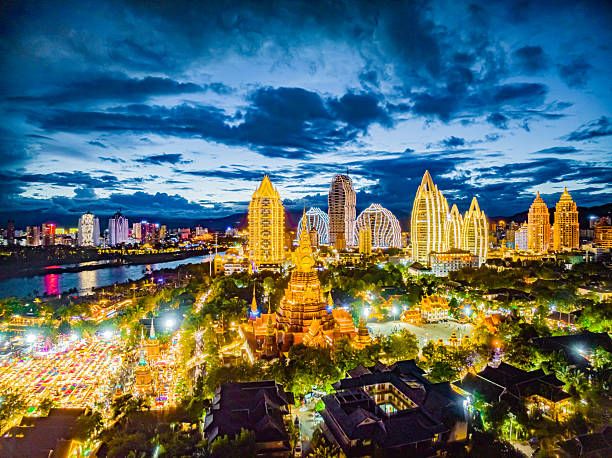
Imagine stepping off a plane in Yunnan and finding yourself not in the mountain highlands that define most of the province, but in a warm, humid lowland where palm trees line the roads, golden Buddhist temples rise above the treeline, and the air smells of grilled lemongrass and ripe tropical fruit. This is Xishuangbanna — China’s deep south, a place that feels more like Southeast Asia than anywhere else in the country.
Xishuangbanna Dai Autonomous Prefecture (西双版纳), tucked into the southernmost tip of Yunnan province, is home to China’s only tropical rainforest, the culturally rich Dai ethnic minority, wild Asian elephants, some of the best night markets you will find anywhere, and a festival so outrageously fun that people fly in from around the world just to get soaked.

Why Xishuangbanna Is Unlike Anywhere Else in China
Most visitors to Yunnan spend their time in the mountains — Kunming, Dali, Lijiang, Shangri-La. Xishuangbanna is the exact opposite. Sitting at just 500 to 800 meters elevation, this is tropical Yunnan. Zero risk of altitude sickness, temperatures between 18 and 35 degrees year-round, and dense green vegetation.
The dominant culture here is Dai, an ethnic minority closely related to the Thai and Lao peoples. The Dai language sounds similar to Thai. The food — grilled meats, sticky rice, lemongrass, fresh herbs — would feel at home in Chiang Mai. The Theravada Buddhism practiced here is the same tradition found in Thailand, Myanmar, Cambodia, and Laos.
Xishuangbanna borders both Myanmar and Laos. Walking through Jinghong, the capital, you will see Dai script on signs, hear Dai music, and pass monks in saffron robes. It genuinely feels like crossing into another country — except your Chinese visa works just fine.
Top Things to Do in Xishuangbanna
Wild Elephant Valley
China’s only place to see wild Asian elephants. Located 47km north of Jinghong, with a cable car over the tropical rainforest canopy and elevated walkways through the treetops. Over 500,000 annual visitors.
Tropical Botanical Garden
China’s largest botanical garden — 900 hectares, 13,000+ plant species, in Menglun town. National 5A. Allow at least half a day, ideally a full day.
Dai Minority Park
Five authentic Dai villages 40km from Jinghong. Traditional stilted houses, Theravada Buddhism, daily water splashing ceremonies. A deep immersion into Dai culture.
Manting Park
A 1,300-year-old royal garden in central Jinghong. Golden pagodas, tropical trees, and an evening bonfire show with Dai music, dance, and sky lanterns.
Primitive Forest Park
1,700 hectares of tropical rainforest just 8km from Jinghong. The “Flight of a Thousand Peacocks” show — hundreds of peacocks flying across a lake — is spectacular.
Wangtian Tree Scenic Area
A 36-meter-high canopy walkway above the tropical rainforest. The tallest trees in China (80m+). Two hours from Jinghong but worth the journey.
Mengle Buddhist Temple
Giant golden Buddha overlooking Jinghong. Southeast Asian-style architecture, panoramic city views. A working Dai Buddhist temple.

The Night Markets of Xishuangbanna
The Gaozhuang Night Market / Starlight Night Market (告庄西双景/星光夜市) is one of the largest night markets in Southeast Asia. It comes alive every evening with hundreds of stalls around the Golden Pagoda (大金塔). Dai-style grilled meats, tropical fruit shakes, handmade crafts, local tea. The smell of charcoal and lemongrass fills the air. Come at least twice during your stay.

Xishuangbanna Food Guide
Lemongrass Grilled Fish (香茅草烤鱼)
THE signature dish. Whole river fish stuffed with lemongrass, chili, garlic, wrapped in banana leaves and grilled over charcoal. Order with sticky rice and a cold beer.
Dai-Style BBQ (傣味烧烤)
Butterflied chickens, fish in banana leaves, bamboo-roasted sticky rice, skewers with Dai chili pastes. Best at street-side stalls — point at what looks good.
Pineapple Sticky Rice (菠萝紫米饭)
Purple glutinous rice steamed inside a hollowed-out pineapple. Fragrant, sweet, unique.
Tropical Fruits
Mangoes, durian, jackfruit, mangosteen, dragon fruit — incredibly cheap and fresh. Eat tropical fruit every single day you are here.
Pu’er Tea
Xishuangbanna is the birthplace of Pu’er tea. Visit plantations, participate in tastings, and buy directly from producers. A cultural highlight even for non-tea-drinkers.

For payment tips at restaurants and markets, see our guide to paying in China.
Want Help Planning Your Xishuangbanna Trip?
Xishuangbanna is spread out, with attractions across different towns. A well-planned itinerary makes a real difference. We know the best routes, the best Dai restaurants, and the timing that avoids crowds. Tell us what you are looking for.
The Water Splashing Festival — Dai New Year
Mid-April (typically April 13-15), Xishuangbanna hosts the Water Splashing Festival (泼水节) — the Dai New Year. First two days: dragon boat racing, sand pagoda building, lantern floating, traditional performances. Day three: the entire city of Jinghong becomes a massive water fight. Thousands of people with water guns and buckets drenching each other. In Dai culture, splashing water is a blessing — the more you receive, the more good fortune.
Book accommodation weeks in advance. Waterproof bags for your phone are essential. Accept your fate: you will get completely, thoroughly, gloriously soaked.

How to Get to Xishuangbanna
By Air: Jinghong Gasa Airport has direct flights from Kunming (~1hr), Bangkok, Chiang Mai, and major Chinese cities. Flights from Kunming often under ¥500.
By Train: High-speed train from Kunming ~3-4 hours. Scenic ride watching the landscape change from highland to tropical. Tickets via 12306 app.
By Bus: 8-10 hours from Kunming. Not recommended with train and flight options available.
Best Time to Visit Xishuangbanna
November to April (Dry Season): Ideal. 20-30°C, low humidity, clear skies. Peak tourism but best weather.
Mid-April: Water Splashing Festival. Hot (30-35°C) but the water fights are refreshing. Book early.
May to October (Wet Season): Daily afternoon rains, high humidity, 35°C+. But greenest rainforest, smaller crowds, lower prices.
For seasonal planning across Yunnan, see our best time to visit Yunnan guide.
Getting Around Xishuangbanna
Didi: Works well in Jinghong for nearby attractions. See our payment guide for setup.
Local Buses: Connect to some attractions but infrequent. See our language barrier guide for communication tips.
Scooter Rental: Popular for Jinghong and surroundings. Flat, warm roads. Always wear a helmet.
Guided Day Trips: Best for farther attractions like Wangtian Tree and Botanical Garden.

Practical Tips
No altitude sickness — 500-800m elevation, lower than most world cities. Zero risk. See our safety guide.
Mosquito repellent essential — tropical region, especially evenings and near forests. DEET works best.
Dress light but cover up at temples — covered shoulders and knees required at Dai Buddhist temples.
3-5 days recommended — 3 days minimum for highlights, 5 for a relaxed experience.
Sun protection — tropical sun is strong, even on overcast days. High SPF, hat, sunglasses.

Ready to Experience Xishuangbanna?
Whether you want to combine Xishuangbanna with other Yunnan destinations or focus entirely on the tropical south, we will handle the logistics. Fill out the form below — no payment needed, no obligation.
Frequently Asked Questions
Is Xishuangbanna worth visiting?
Absolutely. Tropical rainforest, vibrant Dai culture, incredible food, night markets, and wild elephants. Completely different from anywhere else in China. If you have 3-5 spare days, Xishuangbanna is well worth it.
How many days do you need?
Three days minimum for major highlights. Five days for a relaxed pace including farther attractions. Add extra days for the Water Splashing Festival in mid-April.
Will I get altitude sickness?
No. Xishuangbanna sits at 500-800m — lower than most major cities. Zero risk. If coming from higher Yunnan destinations, arriving here will feel like a welcome relief.
What is the best time to visit?
Dry season November to April. Mid-April for Water Splashing Festival. May-October is wet but cheaper with greenest rainforest.
How do I get from Kunming to Xishuangbanna?
Fly (~1 hour, frequent, affordable) or take the high-speed train (~3-4 hours, scenic). Both are convenient from Kunming.
Related Guides
- Best Time to Visit Yunnan
- Is Yunnan Safe for Foreigners?
- Language Barrier in Yunnan
- How to Pay in China as a Foreign Tourist

[…] herbs, then grilled over charcoal. This preparation is common in southern Yunnan, especially in Xishuangbanna, where Dai cooking techniques meet tropical ingredients. The fish is served on banana leaves with […]