
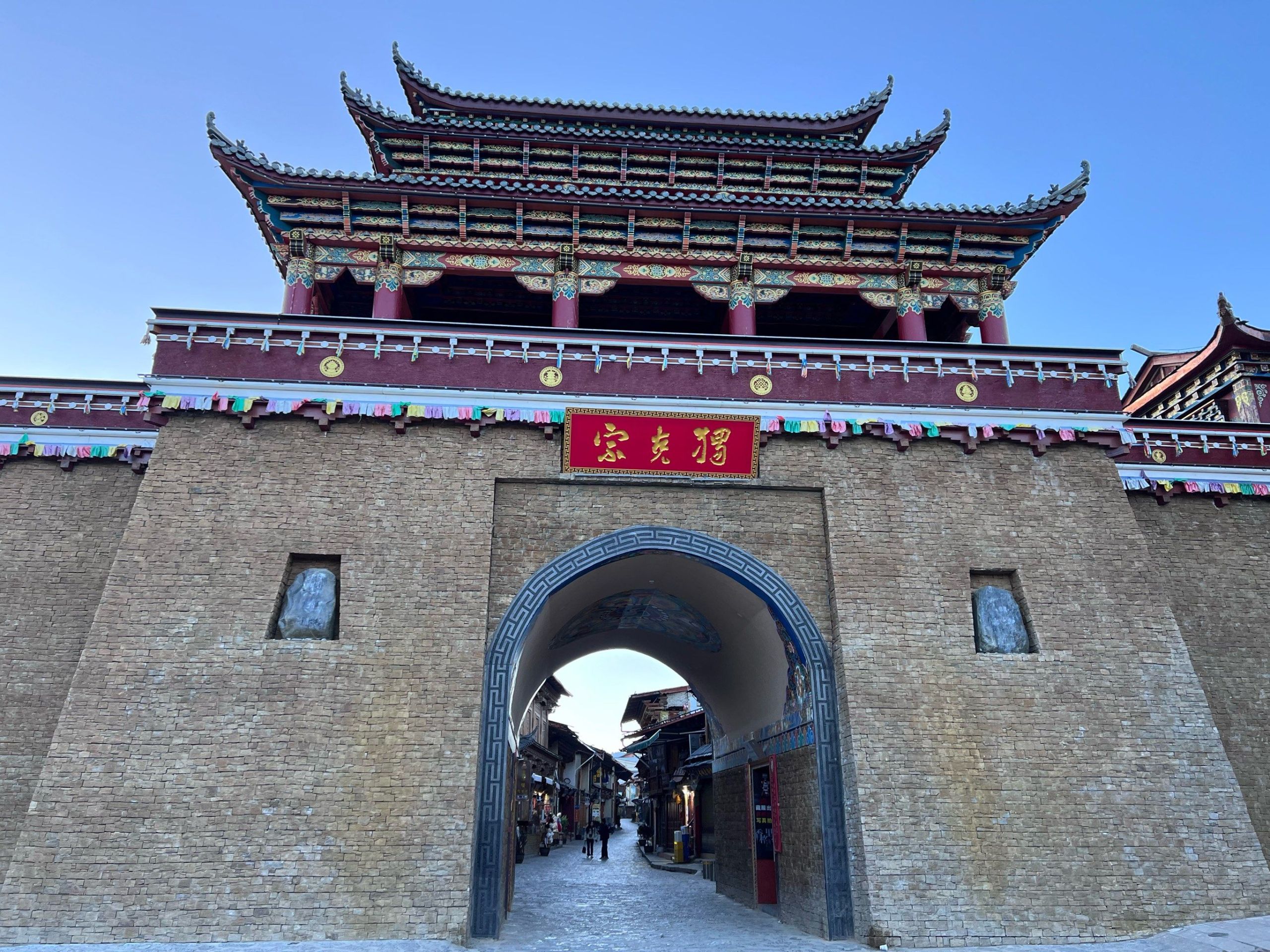
Yunnan is one of those destinations where most people show up, look around in awe, eat incredible food, and head home without any problems. But if your trip includes Shangri-La or a cable car ride up Jade Dragon Snow Mountain, altitude is something worth thinking about before you go — not to scare you, but because a little preparation makes a huge difference.
The good news: the vast majority of visitors manage altitude just fine. You don’t need to be super fit or have special training. You just need to know what to expect and how to sequence your trip sensibly.
This guide covers everything — the elevations involved, how altitude sickness actually works, what to do at Shangri-La vs. Jade Dragon Snow Mountain, how to prevent problems, and when to take it seriously. By the end, planning your high-altitude Yunnan trip should feel a lot less daunting.

How High Are We Actually Talking? Yunnan Elevation at a Glance
Yunnan covers a massive range of elevations — from subtropical valleys to the edge of the Tibetan Plateau. Where you’re going matters a lot. Here’s a quick reference for the main destinations:
| Destination | Elevation | Altitude Risk |
|---|---|---|
| Kunming | 1,890m (6,200ft) | Low — most people feel nothing |
| Dali Old Town | 1,970m (6,460ft) | Low — very comfortable for most |
| Lijiang Old Town | 2,400m (7,870ft) | Mild — occasional light headaches possible |
| Tiger Leaping Gorge (upper trail) | ~2,600m (8,530ft) | Moderate — noticeable if you exert hard |
| Shangri-La (Zhongdian) | 3,160m (10,370ft) | Moderate-high — take it easy on arrival day |
| Meili Snow Mountain base area | 3,400m+ (11,150ft+) | High — proper acclimatization recommended |
| Jade Dragon Snow Mountain (cable car top) | 4,506m (14,783ft) | High — even healthy visitors feel the thin air |
Notice that Kunming and Dali — where most international visitors land or pass through — sit at elevations where altitude sickness is genuinely rare. This works in your favor: if you sequence your trip right (more on this later), your body has time to start adjusting before you hit the higher elevations.
Check out our guide to the best time to visit Yunnan for more on how season affects high-altitude destinations specifically.
What Is Altitude Sickness and Why Does It Happen?
Altitude sickness — medically called Acute Mountain Sickness (AMS) — happens when you ascend faster than your body can adapt to lower oxygen levels. At 3,500m, the air contains about 65% of the oxygen available at sea level. Your body needs time to compensate by producing more red blood cells and adjusting your breathing rate.
According to research published in Wilderness Medicine, AMS affects roughly 25% of visitors at elevations above 2,500m when they ascend quickly — but this drops significantly when people acclimatize gradually. Wilderness & Environmental Medicine Journal has published extensive guidelines on prevention and management that form the basis of most travel health advice today.
Common AMS Symptoms
- Headache (the most common early sign — usually feels like a dull pressure)
- Fatigue and feeling more tired than you’d expect
- Nausea, sometimes vomiting
- Dizziness or lightheadedness
- Shortness of breath, especially when walking uphill or climbing stairs
- Difficulty sleeping (very common even without other symptoms)
Mild AMS is unpleasant but not dangerous. Most people experience some combination of the above on their first day at altitude, feel rough that evening, sleep on it, and wake up noticeably better. The key is not pushing hard on day one.
Fitness level doesn’t protect you from altitude sickness. Elite athletes get it too. What matters is how fast you ascend and how your individual body responds — which you won’t know until you’re there.
The WHO’s International Travel and Health guidelines recommend a maximum ascent rate of 300-500m per day above 3,000m, with a rest day every 1,000m. This is the framework good local guides work from when designing high-altitude itineraries.
Shangri-La: What to Expect on Arrival

Shangri-La (also called Zhongdian) sits at 3,160m — high enough that you’ll feel the altitude, especially on day one, but low enough that your body adjusts reasonably quickly if you come in sensibly.
Most visitors who arrive in Shangri-La after spending a few days in Lijiang (2,400m) or Kunming report feeling a bit breathless on the first day — walking uphill takes more effort, and you might get a mild headache by evening. This is completely normal and not a reason to panic.
Day 1 in Shangri-La: Take It Easy
- Arrive in the morning if possible — gives your body the full day to adjust
- Skip alcohol on your first evening (seriously, it makes altitude headaches much worse)
- Drink more water than usual — at least 3 liters a day
- Eat light — heavy meals feel worse at altitude
- Don’t book any serious hiking or physical activities on day one
Day 2 and Beyond: Most People Are Fine
The vast majority of visitors feel significantly better by day two at Shangri-La. By day three, most people feel completely normal. The body is remarkably good at adjusting to 3,160m if you give it a chance.
Pudacuo National Park, Songzanlin Monastery, and the surrounding countryside are very manageable once you’ve had that initial adjustment period. Guided day trips are ideal because a good local guide will automatically pace things to match your acclimatization — they’ve seen thousands of visitors make this trip and they know the rhythm.
That’s where having a local team in your corner helps a lot. We know exactly which routes, pacing, and city sequences minimize altitude issues — and we’ve handled situations where travelers needed extra rest days or a change of plans.
Plan Your Shangri-La Trip With Built-In Acclimatization
We design every Shangri-La itinerary with altitude in mind — the right sequence of cities, rest days built in, and a plan if someone in your group needs extra time to adjust. Tell us your travel dates and we’ll put together a route that works.
Jade Dragon Snow Mountain: The Big One

Jade Dragon Snow Mountain is a different situation from Shangri-La. The cable car takes you from a base station at around 3,100m up to 4,506m — that’s a 1,400m vertical gain in about 20 minutes. Even if you’ve spent a week in Yunnan and feel completely acclimatized, that kind of rapid ascent is a shock to the system for most people.
The honest reality: nearly everyone feels something at the top. Shortness of breath is essentially universal when you step off the cable car. Some people get a headache within 20-30 minutes. A few feel nauseous. This is normal, expected, and manageable — as long as you go in knowing what to expect and don’t plan to spend hours up there.
How Long Should You Stay at the Top?
Most visitors spend 1 to 2 hours at the summit area — enough time to walk the boardwalk, take photos of the glacier and snow fields, soak in the views, and ride back down. That’s a perfectly reasonable amount of time and most people feel OK for that duration as long as they move slowly and don’t overexert themselves.
If you start feeling significantly worse — intensifying headache, confusion, or you’re really struggling — take it as a signal to head back down sooner rather than later. Descending even a few hundred meters makes a dramatic difference almost immediately.
Oxygen Rental at Jade Dragon Snow Mountain
The cable car operator provides supplemental oxygen at the top — you can rent a canister for around ¥20–50 per unit. This is not a gimmick. Having oxygen on hand genuinely helps if you start feeling rough, and using it for a few breaths when you first arrive can help smooth the initial shock of the altitude jump.
- Oxygen is available at the cable car top station — no need to bring your own
- Cost: approximately ¥20–50 per canister
- Staff at the top are experienced with altitude symptoms — don’t hesitate to ask for help
- Sleep at a lower elevation the night before — Lijiang Old Town (2,400m) is the standard base for this day trip
One of the most practical pieces of advice for Jade Dragon: make it a day trip from Lijiang rather than trying to stay near the mountain. You sleep at 2,400m, ride up to 4,506m for a few hours, and come back down to sleep at 2,400m again. This is the standard approach and it works well. See our Lijiang travel guide for more on using Lijiang as a base.
How to Prevent Altitude Sickness: The Full Strategy
1. Acclimatize Before You Go Higher
This is the single most effective thing you can do. Spend 2–3 days in Kunming (1,890m) or Dali (1,970m) before heading up to Shangri-La. Your body starts producing more red blood cells within 24–48 hours of being at moderate altitude, so arriving “pre-adjusted” makes a real difference when you step off the bus in Zhongdian.
The ideal Yunnan sequence for altitude management: Kunming → Dali → Lijiang → Shangri-La. Each step is a gradual gain, and by the time you reach Shangri-La you’ve been climbing for a week. It’s also just a great route for seeing the best of Yunnan.
2. Hydration Is Serious
At altitude, you lose water faster than normal because you breathe more rapidly and the air is drier. Aim for at least 3 liters of water per day once you’re above 2,500m. Mild dehydration and mild AMS have almost identical symptoms, and staying hydrated can prevent a lot of headaches — literally.
3. No Alcohol on Day One
Alcohol dehydrates you, impairs your body’s oxygen-use efficiency, and makes altitude headaches genuinely terrible. Skip it on your first day in any new high-altitude location. By day two you’ll likely be fine to have a drink with dinner.
4. Sleep Low, Visit High
Your body acclimatizes most during sleep. For Jade Dragon Snow Mountain, sleep in Lijiang. For day trips into higher terrain around Shangri-La, sleep in town. Your overnight elevation matters more than your daytime elevation.
5. Diamox (Acetazolamide) — Ask Your Doctor
Acetazolamide (brand name Diamox) is a prescription medication that speeds up acclimatization by making you breathe more deeply. It’s well-studied, widely used by travelers to altitude destinations, and genuinely effective. According to the CDC’s Yellow Book on High-Altitude Travel, a typical prevention dose is 125–250mg twice daily, starting 1–2 days before ascent.
Talk to your doctor before you leave home. It’s not necessary for everyone — many people do absolutely fine without it — but if you’ve had altitude sickness before, have a tight itinerary, or are simply anxious about it, Diamox is worth discussing.
6. Portable Oxygen Canisters
Small portable oxygen canisters are sold all over Yunnan — in pharmacies, tourist shops, and convenience stores near major sites. They cost around ¥20–50 each and are genuinely useful to have on hand in Shangri-La and around Jade Dragon Snow Mountain. They won’t prevent altitude sickness, but they provide quick relief from symptoms and are easy to use.
Pick up a couple in Lijiang before heading to higher destinations — they’re readily available there and slightly cheaper than buying at tourist sites.

Understanding the Stages: Mild, Moderate, and Severe AMS
Mild AMS — Very Common, Not Dangerous
Headache, fatigue, mild nausea, slightly disrupted sleep. This is what a lot of people experience on their first day in Shangri-La or at the top of Jade Dragon. The right response is: rest, drink water, eat lightly, take a painkiller for the headache if needed, and don’t push yourself physically. Most people improve significantly within 12–24 hours at the same altitude.
Moderate AMS — Take It Seriously
Worsening headache that doesn’t respond to painkillers, significant nausea or vomiting, noticeable loss of coordination, increasing breathlessness even at rest. At this stage, the priority is rest and, ideally, descent to a lower elevation. Do not ascend further. If you’re at Jade Dragon’s summit, get back on the cable car. If you’re in Shangri-La, consider spending a night in Lijiang instead.
Severe AMS: HACE and HAPE — Rare but Urgent
High-altitude cerebral edema (HACE) and high-altitude pulmonary edema (HAPE) are serious, potentially life-threatening conditions. They are rare at the elevations most tourists reach in Yunnan, but you should know the signs.
- HACE signs: extreme confusion, inability to walk in a straight line, severe headache unresponsive to all medication, altered consciousness
- HAPE signs: persistent dry cough that becomes wet or produces pink frothy sputum, extreme breathlessness even at complete rest, bluish lips or fingernails
If you observe these symptoms in yourself or anyone in your group: descend immediately. Don’t wait. Don’t sleep on it. Descent is the definitive treatment and even 300–500m lower can make a dramatic difference. Call emergency services — China’s emergency number is 120 for medical emergencies. Shangri-La has a hospital (香格里拉市人民医院) with experience treating altitude sickness cases.
Who Is Most at Risk?
Here’s one thing that surprises most people: altitude sickness doesn’t discriminate by fitness level. Marathon runners get it. Young, healthy people get it. Meanwhile, older travelers with average fitness often sail through with no issues. Individual physiology matters far more than how fit you are.
- Previous altitude sickness: If you’ve had AMS before, you’re more likely to get it again — but the same prevention strategies still help
- Heart or lung conditions: Including asthma, COPD, pulmonary hypertension, congestive heart failure — get medical clearance before going above 3,000m
- Severe anemia: Low red blood cell counts make altitude harder on the body
- Pregnancy: Generally advised to avoid high altitude above 3,500m, per Royal College of Obstetricians and Gynaecologists guidance
- Flying directly into Shangri-La: There are domestic flights from Kunming to Shangri-La Diqing Airport — this is convenient but means you skip the gradual acclimatization. If you fly in, plan an especially easy first 48 hours

What to Do If Someone Gets Seriously Ill
- Stop ascending immediately. Do not go higher under any circumstances until all symptoms have resolved.
- Rest. Sit or lie down. Slow, steady breathing helps. Supplemental oxygen from a canister provides immediate relief.
- Hydrate. Small sips of water regularly.
- Descend if no improvement. If symptoms worsen or don’t improve after a few hours of rest, go to a lower elevation — even 300m lower helps. Don’t wait until morning if someone is deteriorating.
- Call for help. China emergency number: 120 (medical). Shangri-La has a public hospital. Your hotel can call for a driver and assist with navigation to medical care.
- For HACE/HAPE: Descend immediately, administer oxygen continuously if available, and get to a hospital. This is a medical emergency.
Having travel insurance that covers medical evacuation is strongly recommended for anyone heading to Shangri-La or above. Check your policy specifically for high-altitude coverage. Our article on Yunnan safety for foreign travelers covers insurance and medical access in more detail.

The Honest Bottom Line: Most People Are Fine
We’ve covered a lot of serious information in this guide, and it’s worth stepping back to say: the vast majority of visitors to Shangri-La have a wonderful time. They feel a bit breathless on day one, drink extra water, take it easy that first evening, and by day two they’re hiking around Pudacuo, visiting the monastery, and eating incredible Tibetan food without any issues.
Jade Dragon Snow Mountain is one of the most spectacular places in all of China. The altitude is real, but it doesn’t stop people — the cable car carries thousands of visitors every week, and most of them come away with memories they talk about for years.
Where people run into trouble is usually when they ignore the early signs, try to push through instead of resting, skip the acclimatization days to “save time,” or don’t plan their city sequence thoughtfully. All of those are preventable with good planning.
For more on getting around and staying safe in Yunnan as a foreign visitor, see our guides on how to pay in China as a foreign tourist and is Yunnan safe for foreigners.
Frequently Asked Questions
Is altitude sickness common in Shangri-La for tourists?
Mild symptoms — mainly headache and tiredness on the first day — are fairly common in Shangri-La, especially for visitors who arrive quickly from lower elevations. Serious altitude sickness is much rarer. Most people feel noticeably better by day two and completely normal by day three. Coming via Kunming, Dali, and Lijiang rather than flying directly into Shangri-La dramatically reduces your chances of any significant symptoms.
Can I visit Jade Dragon Snow Mountain if I have asthma?
Many people with mild, well-controlled asthma visit Jade Dragon without incident, but it’s genuinely important to consult your doctor before going. Cold, dry air at 4,506m can trigger bronchospasm, and supplemental oxygen from canisters isn’t a substitute for proper bronchodilators. Make sure you have your rescue inhaler with you at the summit, take it slow, and have a clear plan to descend if you start struggling.
Do I need a prescription for Diamox in China?
Yes, acetazolamide is a prescription medication in China as it is in most countries. The practical advice is to get a prescription from your doctor at home before traveling, fill it in your home country, and bring it with you. Some travel medicine clinics will prescribe it specifically for altitude prevention. Don’t count on being able to buy it over the counter in Yunnan — availability at local pharmacies can be inconsistent.
How long does it take to acclimatize to Shangri-La’s altitude?
Most people feel meaningfully adjusted within 2–3 days at Shangri-La (3,160m). The first 24 hours are usually the hardest, day two is noticeably better for most visitors, and day three typically feels close to normal. Full physiological acclimatization takes weeks, but functional comfort for normal tourist activities — walking around, visiting monasteries, short hikes — comes much faster than that.
What’s the best time of year to visit Shangri-La to minimize altitude sickness risk?
Altitude affects you regardless of season — the elevation doesn’t change with the calendar. That said, autumn (September–November) offers the best combination of clear skies and comfortable temperatures. The season matters more for comfort and scenery than for altitude sickness risk specifically. See our full guide on the best time to visit Yunnan for a detailed seasonal breakdown.
We Handle the Altitude Planning So You Don’t Have To
Every Shangri-La and Jade Dragon itinerary we build includes the right city sequence for acclimatization, rest days at the right moments, oxygen can pickup points, and a contingency plan if someone in your group needs extra time to adjust. Tell us your dates, your group, and where you want to go — we’ll take care of the rest.
[…] For a deep dive on altitude preparation — including whether Acetazolamide (Diamox) makes sense for you — check out our dedicated Altitude Sickness in Yunnan guide. […]